
My First List for Superintendent Piper
Looking back over the past year, Springfield Township has gone through a lot of changes and shifts in how it handles large, controversial land-use proposals. It is no secret that the Township has not made this an easy process to follow along. Residents have endured hot meetings, both literally and metaphorically, with raised voices, interruptions, and insufficient air conditioning.
I have watched this process move through fact-finding meetings, consultant reviews, paused timelines, communication challenges, staffing changes, leadership transitions, and legal counsel changes. At some point, even the flowchart needs a flowchart. I’ll say the quiet part out loud: this has been frustrating.
I am hopeful that some of this has been growing pains; the difficult but necessary work of a Township learning how to build a better system for reviewing major land-use projects because these projects are not ‘going away’.
In May of 2025, the Levy/BMC Special Land Use Permit application quickly escalated, highlighting a much larger challenge for the Township:
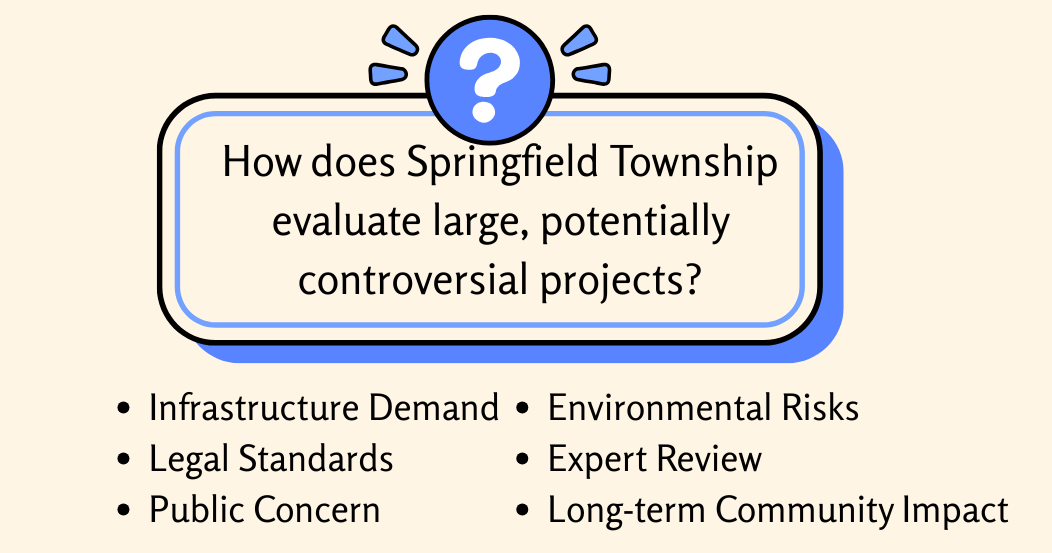
How does Springfield Township evaluate large, potentially controversial projects?
And this is not just about aggregate mining. Springfield Township is also beginning to face questions about other large-scale land-use proposals, including data centers and the infrastructure and planning issues that can follow them. These are complicated projects, and they require a process that residents can actually follow.
I recently met with new Township Superintendent Brian Piper and provided him with what I optimistically described as a “short list” of practical suggestions for improving the Levy/BMC review process & public communications. And by “short,” I mean 17 specific items… but who’s counting?
These suggestions are not meant to make the Township’s job harder. They are meant to help organized the process for everyone involved. I also want to acknowledge that these suggestions may not perfect, nor are they intended to be an all-encompassing list of solutions. They simply reflect what I have observed while following this process for the last year and what I personally see as some of the higher priorities for improving transparency, communication, and public confidence. I want to be clear that I do not work for Springfield Township, represent the Township, or speak on its behalf. I am simply a resident offering observations and recommendations based on my involvement in following the process. The Township is under no obligation to consider or act on any of these suggestions, and they are offered solely as ideas for consideration as the Township continues to evaluate and improve its review process.
The list included:
- Require accurate attendee lists and meeting notes for all project-related meetings.
- This includes correcting the December 15, 2025 data center meeting attendee list to include Reuben Maxbauer of Levy/Burroughs, who was present at that meeting.
- Reflect the February 12, 2026 public comment incident in the official record.
- Improve access to Levy/BMC mining information on the Township website, including a clear front-page link.
- Create a living project timeline that shows what has happened, where the review stands now, what comes next, and who is responsible for each step.
- Make Carlisle Wortman ‘Levy/BMC Monthly Update’ available in printed form at public meetings, as well as at the Township office.
- Retain all audio recordings of meetings related to the Levy/BMC application review for the life of the project.
- Currently, they are deleted after the minutes are prepared.
- Clarify the role of the Fact-Finding Committee
- Create a clear public comment and question submission system so residents can submit comments, questions, correction requests, or concerns online, by email, or in person.
- Create one dedicated project email address for Levy/BMC records, questions, public comments, document corrections, and project-related communication.
- Clearly identify the source of information regarding the mining proposal so residents know if it came from Levy, the Township, or the independent experts.
- Create a public correction process for Township documents, meeting notes, attendee lists, website content, or other public records.
- Create a commitments and follow-through list so residents can see what has been promised, what is pending, what is in progress, and what has been completed.
- Include resident feedback in communication planning, especially as the Township works on website updates or public information improvements.
- Implement a meeting procedure where qualified experts answer technical questions, rather than assumptions by Township leaders.
- If an expert is in the room, let them answer the question. At a minimum, this is a professional courtesy for the experts who are being paid to provide their knowledge and experience.
- Bring Brian O’Mara of Agate Harbor fully up to speed on the Levy/BMC application review, including prior concerns, outstanding questions, consultant reports, public comments, and Township review history.
- Update the Scope of Work communication and report collection process now that Ric Davis is on ‘Leave of Absence’ with no set return date and Greg Need is retiring.
- Clearly identify who [I don’t want to assume automatically that this is the superintendent Brian Piper] is now responsible for receiving expert reports, maintaining the official project record, storing reports, sharing them with the Township Board and Planning Commission, posting public materials, and answering resident questions.
- Establish clear boundaries between Levy/BMC representatives and anyone involved in the Township’s review process.
- End regular private lunches or social meetings between Levy/BMC representatives and Township staff, leadership, or resident participants involved in the review process.
- Make clear that Township leaders, staff, consultants, and resident participants involved in the review should not accept gifts, meals, services, favors, discounts, or other benefits from Levy/BMC or its representatives while the application is pending.
I am not a sports person, so forgive the metaphor, but I have often heard that the best defense is a good offense. For Springfield Township, maybe “offense” could look like looking ahead to land-use trends, keeping good records, and making sure residents are not left trying to decode the playbook from the bleachers.
But I do not work for the Township. I am not there everyday so I will not presume to know what it would take to help them shift from reactive to proactive. And with that in mind, I have a question for the Township:
What do you need to establish a good ‘offense’, rather than the excitable ‘defense’ we are currently seeing?

2 thoughts on “My First List for Superintendent Piper”
Thank you Kara!
Can you please telL ME who Brian O’mara is???
i think we are witnessing a very dysFUNCTIONAL local government
Hi Barbara, Brian O’Mara is hydrogeologist contracted with Springfield Township. He is (supposed to be) reviewing the SLUP by Levy. Please check out more information on this page: https://okoenv.com/springfield-townships-independent-experts/