Data Centers in Michigan: What Residents Should Know
Data centers are becoming a major land use issue across Michigan.
These facilities store, process, and move digital information for things like websites, cloud storage, artificial intelligence, streaming, online banking, and everyday internet services.
Data centers are often promoted as ‘economic development’ projects because they can potentially bring major private investment, construction activity, and possible local tax revenue.
But those benefits are not guaranteed or automatic.
Communities should also ask what tax breaks are being offered, how many permanent jobs will be created, what public infrastructure is needed, whether local residents could bear any long-term costs, and whether the project could create environmental impacts related to water use, energy demand, noise, air emissions, wetlands, farmland, or nearby natural resources.
Data centers can also raise important local questions about electricity demand, water use, noise, zoning, farmland, emergency services, and long-term community impacts. Across Michigan, many townships, cities, and counties are now reviewing their ordinances, considering moratoriums, and asking how these large facilities should be regulated.
Data centers are complex facilities, and this page is meant for general information only. It is a simplified, plain-language overview to help residents understand the basics, follow the local discussion, and ask informed questions.
Jump To:
What is a Data Center?
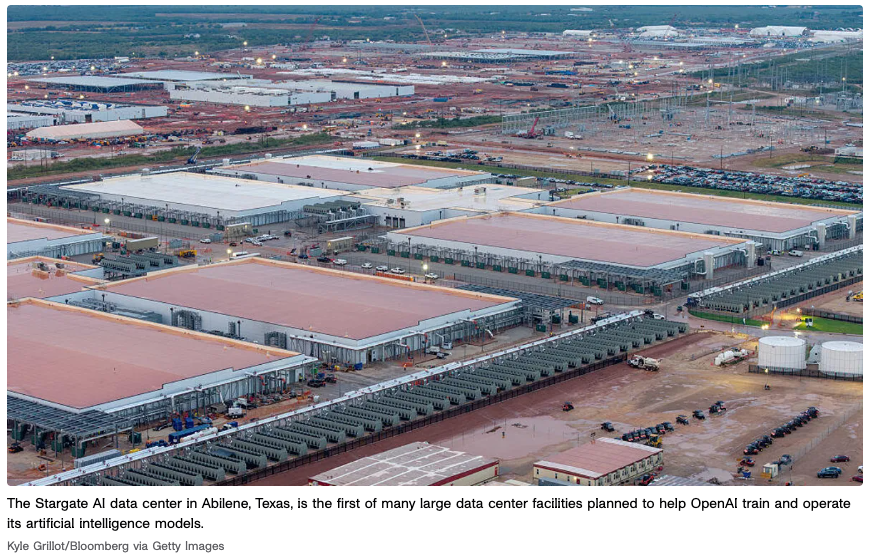
A data center is a building, or group of buildings, filled with computer servers and equipment. These servers run constantly, which means data centers often require:
- Large amounts of electricity
- Cooling systems to prevent equipment from overheating
- Backup power, often including generators and batteries
- High-capacity internet and utility connections
- Security systems, fencing, and restricted access
- Industrial-scale infrastructure, even when located near rural or residential areas
Some data centers are relatively small. Others, often called hyperscale data centers, can use enormous amounts of power and occupy large sites.
Why Are Data Centers Being Proposed in Michigan?
Michigan has become attractive to data center developers for several reasons, including available land, access to power infrastructure, cooler climate, and state-level tax incentives.
In 2024, Michigan approved legislation extending certain sales and use tax exemptions for qualified data center projects. The Michigan Economic Development Corporation describes the program as eliminating Michigan’s 6% sales and use tax on eligible data center construction and equipment purchases for certified projects.
Since then, several Michigan communities have seen new interest from data center developers, and some lawmakers have introduced bills to pause or repeal certain incentives while the state studies the impacts.
In 2026, Michigan lawmakers introduced bills that would create a statewide pause on new data center approvals until April 1, 2027, giving the state more time to study environmental, economic, and infrastructure impacts. These bills have not yet passed, but they show that state lawmakers are also looking at concerns about energy use, water use, infrastructure, and local impacts. Information on the bills:
Several Michigan communities have also considered or adopted local moratoriums. Springfield Township adopted a 180-day moratorium in December 2025, and other communities such as Big Rapids Township, Marengo Township, Lodi Township, Eagle Township, Huron County, Filer Township, and Stronach Township have also taken steps to pause or review data center development.
One of the most closely watched projects is the proposed OpenAI/Oracle “Stargate” data center in Saline Township, which has drawn attention because of its large projected power demand and utility agreements. Reports have described concerns about transparency, electric rates, infrastructure costs, and public input.
Where to Track Data Center Projects
Several public and industry websites track data centers that are proposed, under construction, or operating. These trackers can be helpful starting points, but they may not be complete or fully up to date. Residents should still verify information through local planning records, zoning applications, utility filings, meeting packets, news reports, and FOIA requests when needed.
| Website | Best use |
|---|---|
| Data Center Proposal Tracker | Citizen-run tracker focused on proposed projects, public records, local news, and approximate site boundaries. Helpful for community research. |
| Michigan Data Center Tracker | Michigan-specific tracker covering projects, moratoriums, zoning reviews, and local responses. |
| FracTracker Open U.S. Data Centers Tracker | Maps existing, permitted, and proposed data centers, with emphasis on large projects and energy impacts. |
| CleanView Data Centers Map | Interactive map of planned, under-construction, and operating data centers, including a Michigan page. |
| DataCenterMap.com | More industry-focused list of operating colocation and cloud facilities, including Michigan. Better for existing facilities than local proposal research. |
| Baxtel | Industry database for global data center facilities, operators, regions, and capacity information. Some deeper datasets may be commercial. |
| PNNL IM3 Data Center Atlas | Research-oriented map of existing U.S. data centers with related infrastructure information like electricity, water supply, and fiber availability. |
| ArcGIS U.S. Data Center Trackers | An interactive map showing an in-progress tally of permitted, existing, and proposed data centers in the United States. The map includes filters, data layers, a data download option, and a way to submit additional data center information. |
Electricity Demands
Large data centers can require massive amounts of electricity. This may require new substations, transmission upgrades, backup power systems, or long-term utility agreements.
Just for Reference…
| Power Demand | = # of LED 10-W Bulbs |
| 1 Kilowatt (kW) | = 100 LED Bulbs |
| 1 Megawatt (MW) | = 100,000 LED Bulbs |
| 2 Megawatt (MW) | = 200,000 LED Bulbs |
| 5 Megawatt (MW) | = 500,000 LED Bulbs |
| 10 Megawatt (MW) | = 1 Million LED Bulbs |
| 25 Megawatt (MW) | = 2.5 Million LED Bulbs |
| 100 Megawatt (MW) | = 10 Million LED Bulbs |
| 200 Megawatt (MW) | = 20 Million LED Bulbs |
| 500 Megawatt (MW) | = 50 Million LED Bulbs |
| 1,000 Megawatt (MW) / 1 gigawatt (GW) | = 100 Million LED Bulbs |
| Saline Township Approved Hyperscale Facility ‘Stargate’ Data Center at 1.4 GW | = 140 Million LED Bulbs |
The Michigan Public Service Commission approved new terms for Consumers Energy in November 2025 for very large electric customers, including data centers, with provisions intended to protect existing ratepayers from subsidizing the cost of serving those facilities.
Residents can ask:
- How much power would the facility require?
- Would new substations or transmission lines be needed?
- Who pays for new utility infrastructure?
- Could residential or small business electric rates be affected?
- Will the data center be required to reduce demand during peak-use periods?
- What happens if the project closes before utility investments are paid off?
Water Use and Cooling
Data centers use a lot of electricity, and much of that electricity eventually becomes heat. The servers, computer chips, and other equipment inside the building must be cooled continuously so they do not overheat.
Computer chips use electricity to process information. As electricity moves through the tiny circuits inside the chips, some of that energy becomes heat. A simple comparison is rubbing your hands together quickly: the movement creates heat from friction. In a data center, millions of electronic parts are working at the same time, so the heat adds up quickly and must be removed continuously.
Data center temperatures can be confusing because people may be talking about different parts of the system. The air entering the servers is usually kept much cooler, often around 65°F to 80°F. However, the computer chips inside the servers can run much hotter — sometimes close to 190°F under heavy use. The cooling system’s job is to pull that heat away from the chips and move it out of the building.
Some data centers may describe their cooling system as “closed loop.” A closed-loop system may reuse liquid inside the facility as it circulates through or near the equipment. However, this does not mean the entire cooling process is water-free. The heat collected by the closed loop still has to go somewhere. There must be another cooling system or heat-rejection process that removes heat from the closed loop and moves it out of the facility.

Depending on the design, that second stage may use cooling towers, chillers, dry coolers, evaporative cooling equipment, or another system. Some of these systems use little or no water for cooling, while others can withdraw and consume water, especially when water is lost through evaporation.
In simple terms: the room may be kept cool, but the chips inside the servers can get very hot. A closed loop may reuse liquid inside the building, but the heat still has to be removed. That is why residents should ask not only whether the system is “closed loop,” but how the facility removes heat, how much water is withdrawn, how much water is consumed, and where that water comes from.
Residents can ask:
- What type of cooling system is proposed?
- What temperature range is expected inside the facility?
- How hot can the chips or server equipment get under heavy use?
- Is liquid cooling being used inside the building?
- How is heat removed from the closed loop?
- What second-stage cooling or heat-rejection system is used?
- Will cooling towers, chillers, dry coolers, or evaporative cooling be used?
- Will the system use groundwater, municipal water, surface water, or reclaimed water?
- How much water will be withdrawn each day and each year?
- How much water will be consumed through evaporation?
- Will there be water discharge, chemical treatment, or blowdown water?
- Will water-use data be monitored and publicly reported?
Noise
Data centers can, and usually do, operate 24 hours a day, 7 days a week. Noise may come from cooling equipment, fans, transformers, backup generators, truck traffic, power equipment, and maintenance activity. Unlike some businesses that shut down at night, a data center may create sound continuously because the servers and cooling systems run around the clock.
One concern is the constant hum that can come from fans, cooling units, transformers, chillers, cooling towers, generators, or other mechanical equipment. Even if the sound is not extremely loud, a steady noise can become more noticeable at night when the surrounding area is quiet. Low-frequency sound can also be harder to block with ordinary walls, trees, or distance, and residents may describe it as a hum, rumble, vibration, or droning sound.
Noise can also affect wildlife. Many animals rely on sound to communicate, find mates, defend territory, avoid predators, care for young, and move through habitat. Continuous mechanical noise may interfere with those natural sounds, especially in otherwise quiet rural, wetland, woodland, or lake areas. For some species, noise may change how they use habitat, when they are active, or how successfully they communicate during breeding or migration seasons.
This is why communities should not rely only on a general promise that a facility will “meet the noise ordinance.” A professional noise study should look at both existing background sound and the sound expected from the proposed facility. The study should consider nearby homes, property lines, nighttime conditions, equipment running continuously, generator testing, backup power systems, seasonal conditions, wildlife habitat, and whether the sound has low-frequency or tonal characteristics.
Noise has already become a concern in Michigan. In 2026, a federal class-action lawsuit was filed regarding noise from a data center in Dowagiac, where nearby residents alleged that constant noise from the facility interfered with the use and enjoyment of their property. Reports stated that the lawsuit involved residents living within one mile of the facility.
Residents can ask:
- Will a professional noise study be required before approval?
- Will the study measure existing background noise before construction?
- Will the study evaluate noise during both daytime and nighttime hours?
- Will it consider the constant 24/7 hum from cooling systems, fans, transformers, and power equipment?
- Will the study evaluate low-frequency sound, tonal noise, vibration, or infrasound?
- Will the study consider nearby wetlands, woodlands, lakes, wildlife corridors, nesting areas, or migration routes?
- Will the study evaluate whether noise could affect wildlife communication, breeding, feeding, predator detection, or habitat use?
- What will the noise limits be at the property line?
- Will there be lower nighttime noise limits?
- Will noise be measured at nearby homes and sensitive natural areas, not just at the edge of the data center property?
- Will backup generators be tested, and how often?
- Will generator testing be limited to daytime hours and outside sensitive wildlife seasons when possible?
- Will noise controls such as sound walls, acoustic enclosures, silencers, setbacks, or equipment placement be required?
- Who investigates noise complaints?
- Will post-construction noise testing be required after the facility is operating?
- What happens if the facility violates the ordinance or creates a nuisance?
| Source | Notes |
|---|---|
| Environmental and Energy Study Institute — “Communities Are Raising Noise Pollution Concerns About Data Centers” | Good public-friendly overview of data center noise sources, including cooling systems, air chillers, diesel generators, fans, low-frequency hum, and why continuous noise can be difficult for communities. |
| ClassAction.org — Dowagiac, Michigan Data Center Lawsuit | Michigan-specific example involving allegations of excessive data center noise affecting nearby residents within one mile of the facility. Useful as a current-event example, not as proof of final legal findings. |
| Michigan Advance — Federal class-action lawsuit filed over Dowagiac data center noise | Local Michigan reporting on the Dowagiac lawsuit and residents’ noise concerns. |
| Spectrum News — Michigan residents sue data center over constant noise | Reports that residents described constant noise and raised health/livability concerns. Useful for showing that the concern is already active in Michigan. |
Land Use, Zoning, and Rural Character
Data centers are often industrial in nature, even when they are proposed near agricultural, rural, or residential areas. Communities may need to decide where they belong, what zoning district is appropriate, and whether they should require special land use approval.
Some Michigan communities have adopted temporary moratoriums while they study zoning and regulatory options. The Michigan Townships Association has noted that townships may choose to enact temporary moratoriums on receiving or processing data center applications while considering regulations for hyperscale data centers.
Residents can ask:
- Is a data center currently allowed under local zoning?
- Would it require rezoning or special land use approval?
- Is the proposed site compatible with the master plan?
- How close would it be to homes, schools, farms, wetlands, or parks?
- Would screening, setbacks, landscaping, and lighting limits be required?
- Would the ordinance distinguish between small data centers and hyperscale data centers?
Emergency Services and Public Safety
Data centers may include backup generators, battery storage, fuel storage, electrical equipment, security systems, and restricted-access areas. These features can affect fire response, hazardous materials planning, and local emergency services.
Residents can ask:
- Has the fire department reviewed the plans?
- Are backup generators, batteries, or fuel tanks proposed?
- What fire suppression systems will be used?
- Are local emergency responders trained and equipped for this type of facility?
- Will the developer pay for added emergency service needs?
- Is there an emergency response plan?
How Are Data Centers Regulated?
Data centers may be reviewed at several levels, but there is no single “data center permit” that answers every concern.
Local Government
Townships, cities, and counties usually address land use through zoning. Local ordinances can regulate things like:
- Zoning districts
- Special land use approval
- Setbacks
- Building height
- Screening and landscaping
- Lighting
- Noise
- Traffic
- Site plan review
- Emergency access
- Performance standards
Local regulation is important because many impacts are site-specific.
State Government
State-level issues may include tax incentives, energy policy, utility regulation, environmental permits, water withdrawal rules, and infrastructure planning.
The Michigan Public Service Commission regulates utilities and has begun addressing how very large electric customers should pay for the power infrastructure they require.
Federal Issues
Federal agencies may become involved when projects affect energy infrastructure, wetlands, endangered species, air emissions, or grid reliability. In June 2026, federal regulators directed regional grid operators to speed planning for connecting large AI data centers to the electric grid, while also stating that data centers should bear the cost of necessary grid upgrades.
Questions Residents Can Ask
Residents do not need to be engineers or attorneys to participate in the process. A few clear questions can help bring important information into the public record.
Project Basics
- Who is the applicant?
- Who will own and operate the facility?
- How many acres are involved?
- How large will the buildings be?
- Will the facility operate 24/7?
- Is this a small, enterprise, hyperscale, or AI-focused data center?
Electricity
- How many megawatts will be required?
- What new utility infrastructure is needed?
- Who pays for upgrades?
- Will costs be passed on to ratepayers?
- Are long-term power contracts required?
Water
- What cooling system will be used?
- How much water will be used?
- What is the water source?
- Will groundwater, wells, wetlands, or streams be affected?
- Will water use be monitored and reported?
Noise and Lighting
- Will there be a baseline noise study?
- What are the nighttime noise limits?
- How often will generators be tested?
- Will exterior lighting be shielded and limited?
- What happens if residents file complaints?
Local Impacts
- Is the site consistent with the master plan?
- How close is it to homes, schools, farms, or natural areas?
- Will roads, emergency services, or utilities need upgrades?
- Who pays for long-term maintenance or added public service costs?
- What happens if the facility closes or changes ownership?
Why Local Review Matters
Data centers are not all the same. A project connected to municipal water and existing industrial infrastructure may raise different questions than a project proposed near homes, farmland, private wells, wetlands, or rural roads.
That is why local review matters. Communities need enough time and information to understand the full picture before approving zoning changes, site plans, utility extensions, or development agreements.
A careful review does not mean a community must automatically oppose every data center. It means residents and local officials should understand the costs, benefits, risks, and responsibilities before decisions are made.
To Our Dear Community Leaders… Please Start Asking More Questions!
The Bottom Line
Data centers are part of modern life. They support the internet, cloud storage, artificial intelligence, business systems, streaming, banking, healthcare records, and many other services people use every day. But even though they are tied to technology, data centers are not just “tech projects.” They are major land use and infrastructure projects.
In Michigan, the conversation about data centers is no longer only about economic development or faster technology. It is also about electricity demand, water use, backup generators, noise, farmland loss, zoning, local control, emergency services, public costs, and long-term community planning.
A data center can affect more than the property where it is built. It may require new or upgraded power lines, substations, roads, water infrastructure, stormwater systems, and emergency response planning. These costs and impacts need to be understood before a project is approved — not after.
For rural and semi-rural communities, the questions are especially important. Many communities have spent years trying to protect farmland, wetlands, forests, groundwater, wildlife habitat, dark skies, and small-town character. A large data center can change the way land is used, how much energy and water a site demands, and what nearby residents experience on a daily basis.
That does not mean every data center should be automatically rejected. It means communities should slow down, ask clear questions, and make sure their ordinances are strong before applications move forward. Local governments should know what types of data centers are allowed, where they are allowed, what information applicants must provide, and what protections are required for residents and natural resources.
As more data center proposals appear across Michigan, residents can help by paying attention early. They can ask for clear documentation, request public review of impacts, attend meetings, submit written comments, and encourage local officials to adopt ordinances that protect public health, natural resources, public infrastructure, and the long-term character of the community.
The best time to plan for data centers is before a major application arrives. Once a proposal is already under review, the community may have fewer options. Strong local ordinances, clear standards, and public involvement help make sure decisions are made with the whole community in mind.
Recommended Resources & Articles
Residents & Community Leaders who want to learn more about data centers may find the following resources helpful. Some are Michigan-specific, while others explain broader concerns such as water use, electricity demand, zoning, infrastructure costs, and community planning.
- University of Michigan Graham Sustainability Institute — Data Center Guidebook
- A Michigan-focused guide written for local officials and planners. It explains data center siting, environmental impacts, economic considerations, and planning and zoning tools.
- Michigan Public — Data Centers in Michigan: What You Need to Know
- A public-friendly article about data center growth in Michigan, including concerns about energy demand, water use, tax incentives, and transparency.
- Alliance for the Great Lakes — Data Center Playbook
- A guide for residents, community groups, and local leaders in the Great Lakes region. It focuses heavily on water use and includes checklists for questions communities can ask.
- Planet Detroit — Wixom Weighs Data Center Ordinance
- An article about how one Michigan community is considering local rules for data centers, including water use, noise studies, residential buffers, infrastructure costs, and financial protections.
- The Fallacy of Closed Loop Cooling Systems
- This article explains why the phrase “closed loop cooling” can be misleading. It helps residents understand that even when one part of a cooling system recirculates water, other parts of the system may still use or lose water, especially through heat exchange and evaporation. Published February 25, 2025, on Eat Your Frog.
- National League of Cities — Community Strategies to Address Data Center Development and Operation
- A fact sheet for local governments about managing data center land use, zoning, permitting, environmental concerns, and community impacts.
- National Association of Counties — Data Centers: County Considerations
- A primer for county and local governments reviewing data center proposals. It discusses land use, energy, water, infrastructure, and long-term community impacts.
- Southern Environmental Law Center — Getting It Right: Local Approaches to Data Center Development
- A detailed report about how local zoning ordinances can help communities review data center proposals in a more informed, transparent, and responsible way.
- NADO — Data Center Planning Resources for EDDs and RDOs
- A collection of planning resources that may be useful for communities, regional planners, and local officials trying to understand data center development.
- Climate XChange — Water Impacts: State Policy Toolkit for Data Center Regulation
- A policy-focused resource about data center water use, public costs, utility impacts, and possible state-level tools for regulation.
- Congressional Research Service — Data Centers and Their Energy Consumption
- A nonpartisan federal resource explaining data center energy use and the growing demand for electricity.
- University of Virginia Weldon Cooper Center — Data Centers in the Great Lakes Region
- A regional study examining economic, fiscal, and energy-related impacts of data centers across Great Lakes states.
This work is powered by residents, not developers.
Contributions help Oko Environmental continue providing independent research, document analysis, and public updates at no charge.