
Exploratory Well Construction Started
After several local township residents reached out to Oko Environmental reporting ongoing construction at the site of the proposed Levy/Burroughs Materials mine on Ormond Road, I took a drive to check out the site and equipment.
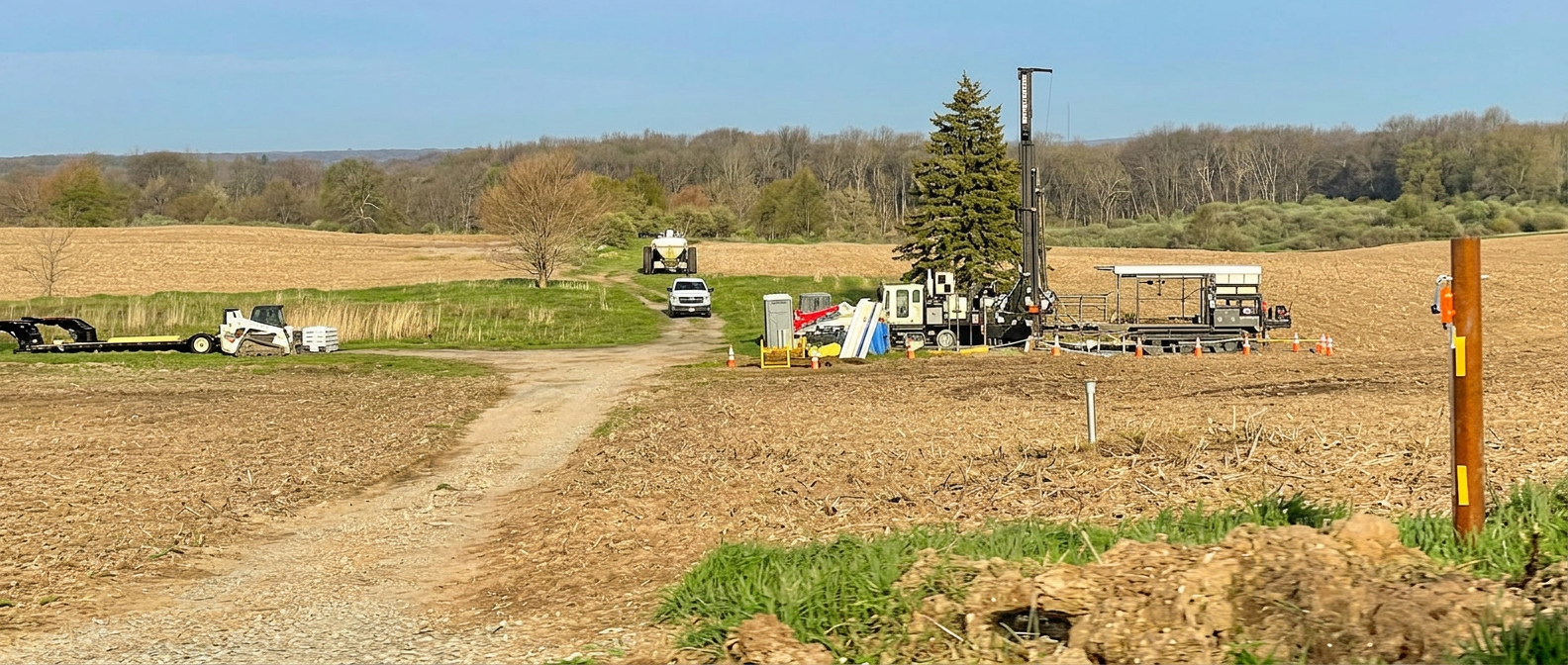
Based on observations and photos shared among neighbors, plus previous emails from Reuben Maxbauer (Levy) to Ric Davis, this appears to be related to construction of an exploratory well that will be used to test the aquifer or aquifers beneath the property.
An exploratory well is not the same thing as a private residential water well. In this context, it is typically installed so hydrogeologists can gather information about underground water conditions. That may include the depth to groundwater, the type of materials below the surface, how easily water moves through those materials, and whether there are separate groundwater systems present.
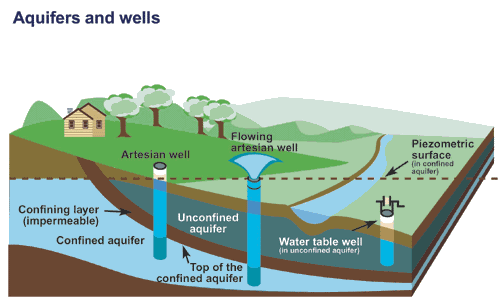
This simplified diagram helps show why the exact location and depth of a well matters: different wells can draw from different underground layers, and groundwater may occur in sand, gravel, clay-influenced deposits, or fractured bedrock. This diagram is not site-specific to Ormond Road.

This diagram is useful because it shows that “groundwater” is not always one simple underground pool. Water can move through different materials in different ways. Sand and gravel can transmit water more easily, while clay or till layers may slow or separate groundwater movement. Deeper bedrock fractures can also hold and transmit water differently than shallow sand and gravel deposits. That is why the test should clarify whether the well is evaluating a shallow unconfined aquifer, a deeper confined aquifer, or more than one groundwater system.
An unconfined aquifer is closer to the surface and is more directly influenced by rainfall, wetlands, lakes, seasonal changes, and nearby surface conditions. A confined aquifer is separated from the surface by a less permeable layer, such as clay or till, and may respond differently when water is pumped, removed, or disturbed.
The goal of this test should be to help identify how groundwater is arranged beneath the site, whether confined or unconfined aquifers are present, which aquifer or aquifers are being tested, and how water may move through the property.
Monitoring wells are also an important part of this process. These are smaller wells placed around the test area to measure how groundwater levels respond during pumping or testing. They help show how far the effects of pumping may reach, how quickly groundwater levels recover, and whether nearby wetlands, lakes, private wells, or other water resources could be affected.
The application estimates approximately 22,000 gallons of water per day for operation, along with a one-time annual fill of 135,000 gallons for the processing equipment. Because the mining plan involves excavating below the water table and creating a lake, the aquifer testing should help clarify how groundwater occurs beneath the site, and which aquifer or aquifers are involved.
It is still unclear whether operational water use would come from the same groundwater system exposed by mining or from a deeper aquifer. If water is drawn from a deeper aquifer, it is also unclear where that water would go within the site after use, whether it would enter the processing system, be routed to the proposed mine lake, infiltrate back into the ground, or otherwise affect the site’s groundwater and surface water conditions. That should be clearly explained before the results of any aquifer test are used to support decision-making.
As of April 27, 2026, Springfield Township has not released public information explaining this construction activity, the purpose of the well, the testing plan, the location of monitoring wells, the aquifers being evaluated, or how the results will be shared with residents and independent experts.
When a proposed mining operation involves groundwater, wetlands, lakes, private wells, and surrounding natural resources, clear public communication is important.
As this process moves forward, residents should not have to rely on neighbors and roadside photos to understand what work is happening on the site. Regular public updates from Springfield Township would help the community stay informed about the testing process, who is reviewing it, and when results may be available.
