
The Science of Snow
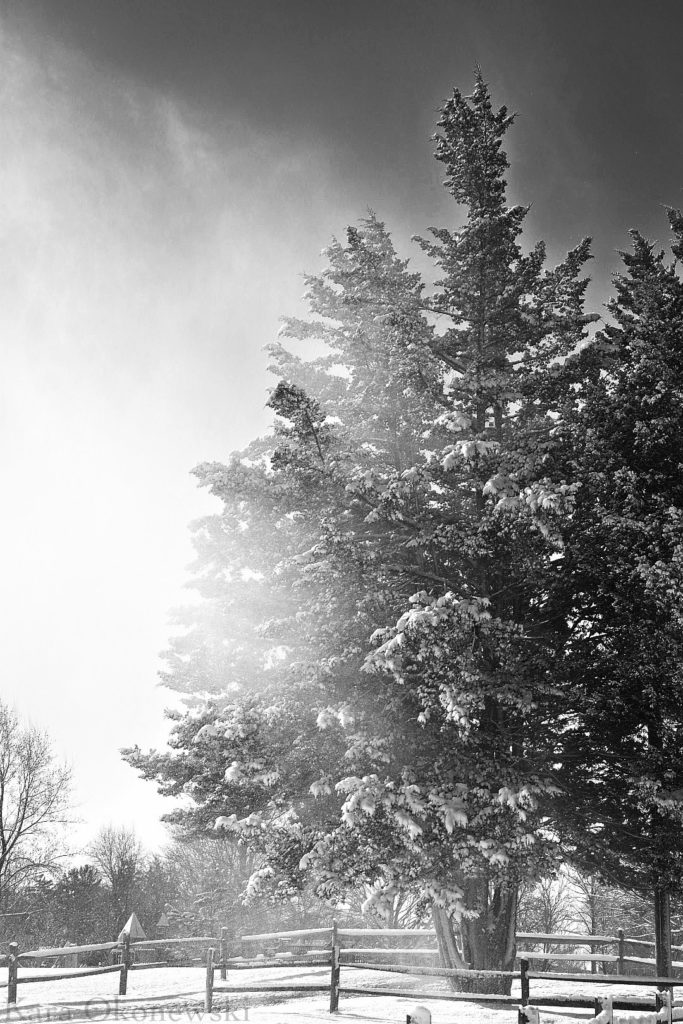
It has been a snowy start to winter, and with the holidays around the corner, the white landscape is certainly setting the mood. I’ve been studying environmental science and teaching the public about the natural world for nearly fourteen years, and winter ecology remains one of my favorite subjects. While snow-covered hills and frozen lakes bring a sense of stillness to this time of year, winter is far from inactive. Beneath the quiet surface is a constant, often invisible struggle for survival — one that reveals some of the most remarkable adaptations in the natural world.
Let’s start at the beginning…
At the smallest scale, snow begins as structure. As snowflakes fall to Earth, each one forms according to the molecular architecture of water itself. Hydrogen bonds lock water molecules into a hexagonal pattern, giving snow crystals their characteristic six-sided symmetry. Temperature and humidity shape how that symmetry grows — thin plates in one layer of air, branching dendrites in another. Under certain atmospheric conditions, complex forms can appear to have many branching arms, but the underlying structure remains six-sided.
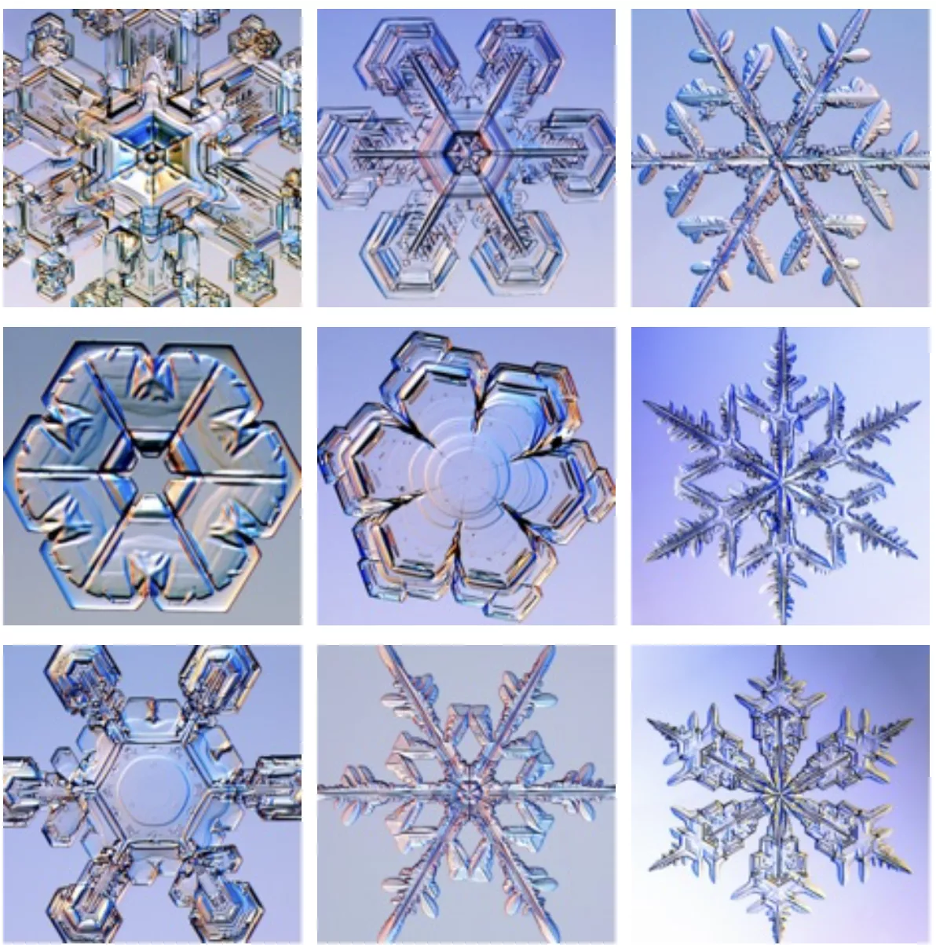
A snowflake is not random. It is a record of the atmosphere it traveled through, built moment by moment as it fell. The rules are constant; the paths are not. Scientists classify these forms into distinct structures such as plates, columns, needles, and dendrites, each shaped by precise environmental conditions. Here are photographs of snowflake types provided by NOAA. You can take pictures of snowflakes too! Just freeze a black piece of paper (to reduce melting on contact) and take it out during falling snow. When you catch a few flakes on the paper, you can easily see the architecture.
Once snow reaches the ground, it continues to build — not just outward, but vertically.
Winter creates layers, even before we notice them. The nivean world is the snow itself with falling crystals, drifting banks, and the white surface that reshapes the land. Above it is the supranivean layer, where wind, sunlight, and temperature sculpt snow into crusts and drifts. Beneath it lies the subnivean layer, a narrow, insulated space between soil and snow where air is trapped, temperatures stabilize, and life persists through winter.
Snow does not simply cover the ground. It builds a seasonal architecture that protects soil structure, reduces frost penetration, and preserves the conditions that allow water to infiltrate slowly when thaw arrives. It governs how water moves, how ecosystems endure winter, and how spring begins gradually, not abruptly, through melt and seep and saturation.
Even spiders need snow in the winter. Unlike mammals, spiders generate little internal heat. Their survival depends on microclimate, not insulation. The subnivean layer provides stable humidity, moderated temperatures, and shelter from wind and predators.
Spiders move through the subnivean layer, a network of tiny corridors created as snow arches gently over the uneven ground. They travel through natural pore spaces in leaf litter and soil, reuse tunnels made by insects or small mammals, and anchor themselves with silk as they move. They do not dig these spaces; they inhabit what snow creates. Snow does not stop them. It makes their survival possible.
Some creatures go further still.
Painted turtles and a few other species survive winter through freeze tolerance — a rare biological ability to endure partial freezing. As temperatures drop, their metabolism slows into torpor, a deep state of reduced activity. Oxygen disappears. Hearts may stop. Ice forms in their tissues. Cells flood with glucose, acting as antifreeze, while the turtle’s shell absorbs acid produced during months without oxygen, a state known as anaerobic dormancy.
This is not hibernation or sleep. It is biochemical suspension, held safely in place by stable winter conditions.
Snow makes all of this possible. It stores water patiently, releasing it slowly into soil and groundwater. It buffers temperature, protects roots, shelters insects, and softens winter’s extremes. Snow teaches that stillness can be active, that structure can be quiet, and that survival does not always require motion.
When snow falls, it reshapes the landscape in ways we can see. But its most important work happens slowly and out of sight, in layers, in shelter, and in time. Winter is not an absence of life, but a season of careful holding.
Winter words, simply defined:
Nivean — relating to snow itself: falling flakes, snowpack, and surface accumulation.
Supranivean — the space on and above the snow surface, shaped by wind, sun, and temperature.
Subnivean — the insulated space beneath snow and above the ground, where air is trapped and life persists through winter.
Freeze tolerance — the ability of some organisms to survive partial freezing of their bodies.
Torpor — a state of dramatically reduced metabolism and activity that conserves energy in cold conditions.
Anaerobic dormancy — survival without oxygen for extended periods, supported by specialized biochemical processes.
